India’s packaging industry is booming — the Indian PET packaging market is growing at a Compound Annual Growth Rate of 4.04%, while PET resin demand is rising even faster at 6.12% annually. From a chilled water bottle on a railway platform to a pharma syrup on a chemist shelf — plastic bottles are everywhere around us. But nobody stops to ask: where does a bottle actually begin?
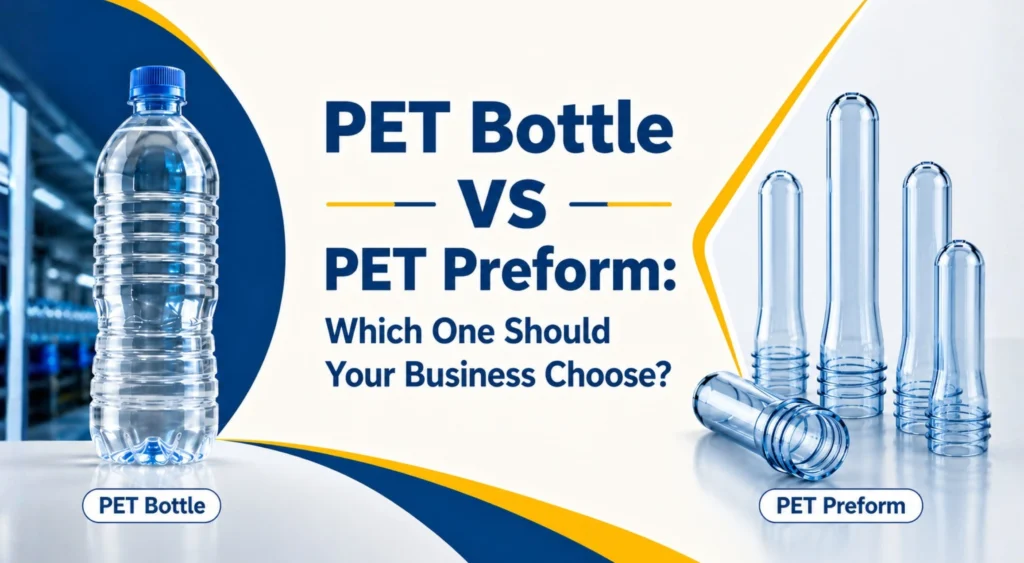
The answer is a PET bottle preform — a small, test-tube-shaped plastic part that is the starting point of every PET bottle or container you see around you.
Yet most packaging buyers, production managers, and brand owners never fully understand the different types of PET preforms available — and that lack of knowledge costs them. Wrong neck size, wrong weight, wrong material grade — each mistake leads to production downtime, bottle failures, and unnecessary costs.
This guide breaks down every major type of PET preform, their specifications, and their industrial applications — so you can make smarter, more confident packaging decisions every single time.
What Is a PET Preform?
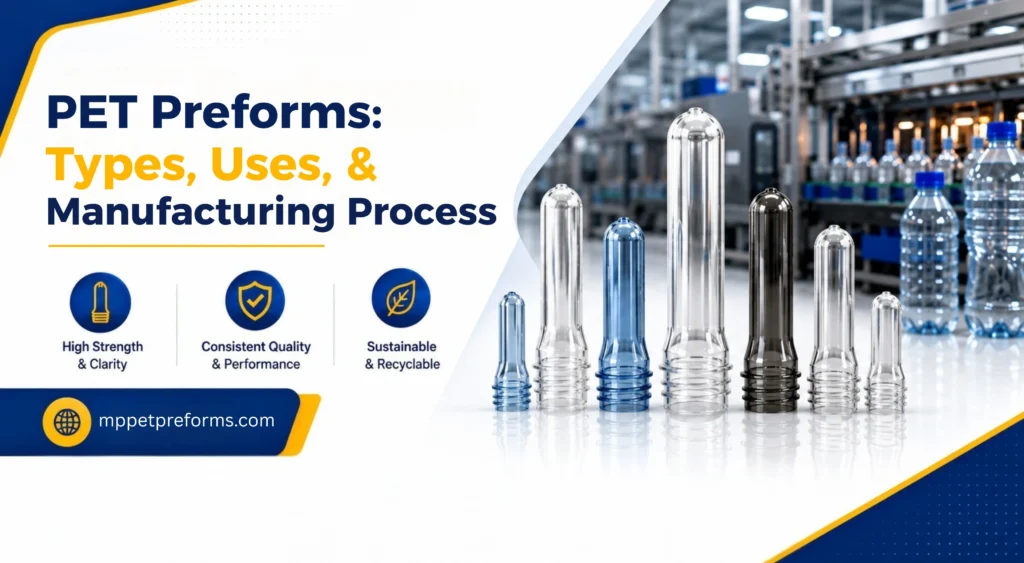
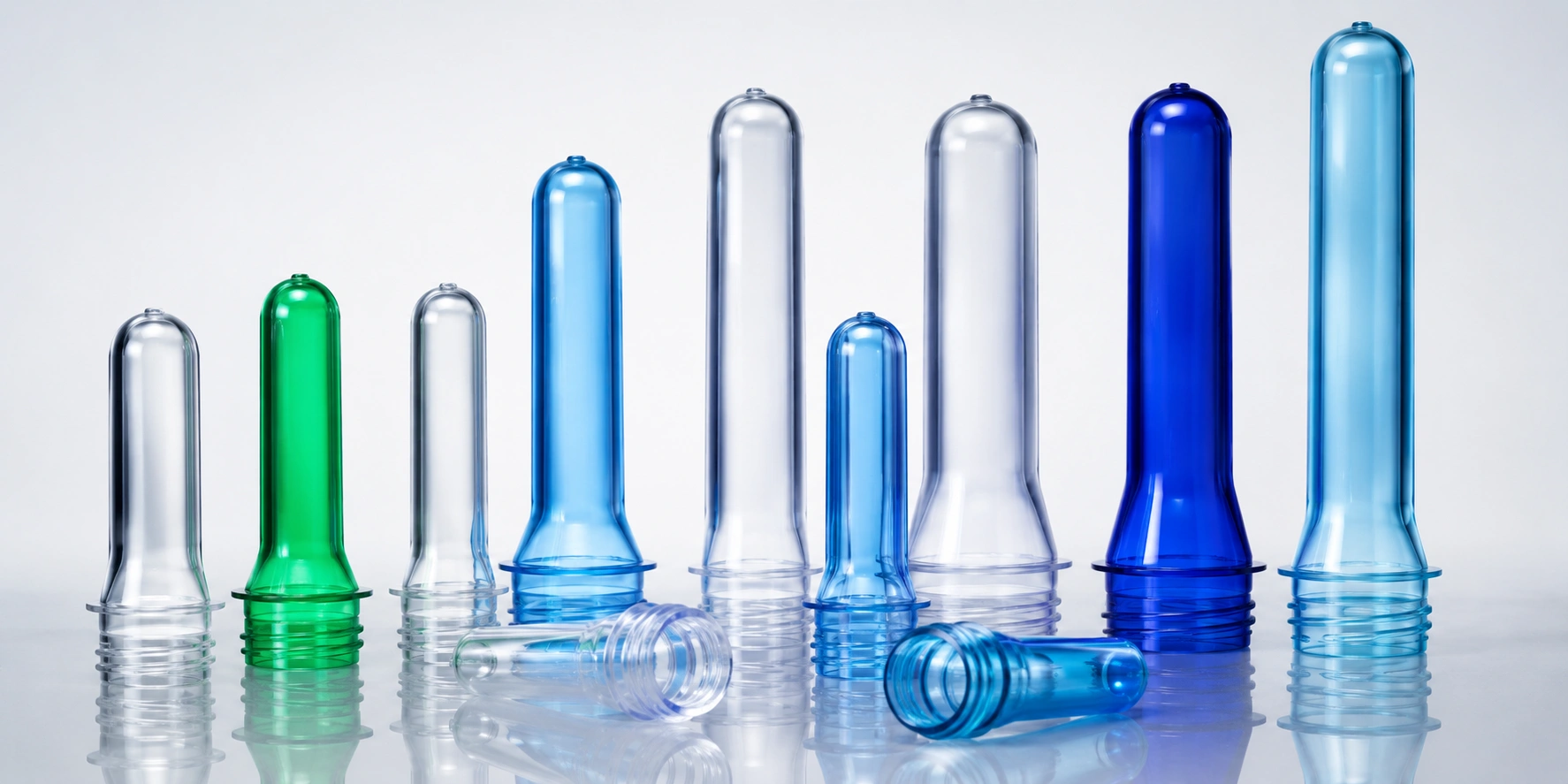
A PET preform is an intermediate product that looks like a test tube used in the making of a PET bottle, shaped from a strong, light and food-safe plastic resin called Polyethylene Terephthalate (PET). It is the first stage in the production of a PET bottle or container.
The preform is produced in an injection moulding process in which molten PET resin is injected into a high precision mould to create a thick tube with a finished neck/thread at the top. The preform is reheated and then blown into the final bottle form by a stretch blow moulding machine.
Key properties of PET as a material:
- High clarity and transparency
- Excellent barrier against moisture, gas, and oxygen
- Lightweight yet strong and impact-resistant
- 100% recyclable
- Food-grade and safe for direct contact with consumables
These properties have made PET the material of choice for packaging in the beverage, food, pharma, personal care and beyond.
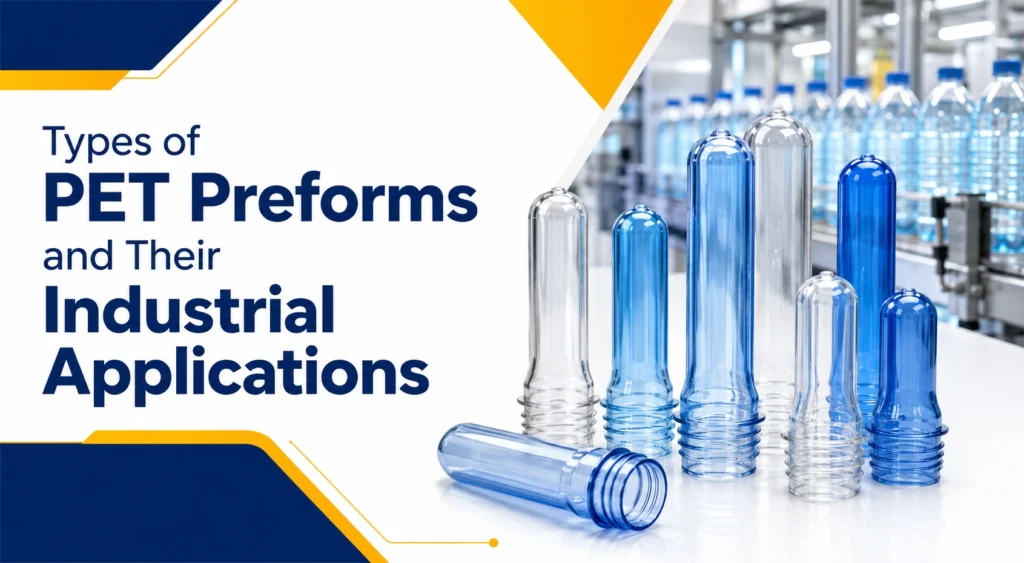
Understanding PET Preform Types and Their Uses Across Industries
PET preforms are not a one-size-fits-all product. Every industry, every bottle, and every filling line has different packaging requirements. Understanding the different types of PET preforms helps you pick the right one — saving costs, reducing waste, and protecting your product quality consistently.
By Neck Size
The neck size of a PET preform is one of the most critical specifications to get right. It determines which cap or closure fits the final bottle and must match your filling line and capping machinery exactly. A wrong neck size means your entire production batch is unusable.
Types of Neck size PET preforms:
- PCO 1881 Short Neck: This is the global go-to for carbonated drinks. Its shorter height cuts plastic weight while easily handling high gas pressure.
- PCO 1810 Long Neck: The older, taller 28mm standard. Brands still use it today simply to avoid the massive cost of upgrading legacy machinery.
- Alaska Neck Preforms: An ultra-lightweight, budget-friendly design. It is the absolute favorite for local packaged mineral water plants all over India.
- CTC 29/21 Neck Preforms: A unique snap-on “Click-To-Cap” finish. It features a built-in tear-off seal made specifically to keep cooking oils leakproof.
Industrial Applications of Neck size PET preforms:
- Packaged drinking water and mineral water bottles
- Carbonated soft drinks and sparkling beverages
- Juice, nectar, and flavoured drink bottles
- Energy drinks and sports beverages
- Ready-to-drink tea, coffee, and health drinks
- Small beverage brands and contract filling units
By Weight and Wall Thickness
The weight of a PET preform directly determines the wall thickness and strength of the final bottle. Choosing the right preform weight is essential — too light and your bottle deforms, too heavy and you waste material and increase your per-unit production cost unnecessarily.
Types of PET preforms based on weight and wall thickness:
- Lightweight Preforms (8g – 14g): Designed for small, still water bottles. They use very thin walls to minimize plastic costs for budget-conscious packaging lines.
- Medium Weight Preforms (18g – 30g): The standard choice for mid-sized juices and sodas. They offer balanced wall thickness to withstand carbonation and pressure.
- Heavy Weight Preforms (35g+): Built for large-format jars and multi-litre containers. Thick, rugged walls prevent deformation during high-volume filling and heavy transport.
Industrial Applications of PET preforms based on weight and wall thickness:
- Packaged drinking water bottles (250ml to 2 litre)
- Edible oil and juice bottles (500ml to 1 litre)
- Carbonated soft drink bottles (1.5L and 2L)
- Dairy, sauce, and condiment packaging
- Industrial chemical and cleaning product containers
- Pharmaceutical bulk liquid and supplement packaging
By Layer Construction
The layer construction of a PET preform determines how well the final bottle protects its contents from oxygen, moisture, UV light, and gas loss. For most applications a single layer works well — but for longer shelf life products, layer construction becomes a critical packaging decision.
Types of PET preforms based on layer construction:
- Single-Layer Preforms: The standard, most affordable option. Made from pure PET, they work perfectly for everyday items like water and short-shelf-life sodas.
- Multi-Layer (Barrier) Preforms: Engineered with protective internal layers. They block oxygen and UV rays, making them essential for preserving sensitive drinks like beer, milk, and juices.
Industrial Applications of PET preforms based on layer construction:
- Long shelf life fruit juices and dairy products
- Beer and carbonated beverages for export markets
- Light-sensitive pharmaceutical and nutraceutical liquids
- Premium food products requiring extended freshness
- Personal care and cosmetic bottles
- Standard water and beverage packaging
Selecting the right PET preform type is a foundational packaging decision. The neck size, wall thickness, and layer construction together determine your bottle’s performance, cost, and shelf life. Getting all three right means fewer rejections, lower waste, and a better product reaching your customer every time.
How to Choose the Right PET Preform for Your Application
Here is a simple step-by-step breakdown:
Step 1 — Define your product type
Start by identifying your product type — beverage, food, pharma, or personal care. This determines the material grade, special properties like hot fill or pressure resistance, and compliance requirements. For water, edible oil, spices, or pharma liquids, Mahalaxmi Polymer manufactures preforms suited for all these categories.
Step 2 — Identify your bottle capacity
Once you know your product, match your required bottle volume to the correct preform weight. A heavier preform gives a thicker, stronger bottle. A lighter preform reduces material cost for smaller volumes. Always confirm the weight range with your manufacturer before placing a bulk order.
Step 3 — Choose the correct neck size
Your neck finish must match your capping machinery and closure system exactly. A mismatch leads to leakage, contamination, and production waste. Mahalaxmi Polymer offers PCO 1881, PCO 1810, Alaska Neck, CTC 29/21, and Liquor Neck preforms — covering most standard filling line requirements across industries.
Step 4 — Decide on layer construction
For most standard applications, single-layer preforms are sufficient and cost-effective. However, if your product is a juice, dairy item, beer, or any beverage requiring extended shelf life, consider multi-layer barrier preforms that block oxygen, CO₂ loss, and UV light penetration effectively.
Step 5 — Verify material compliance
Always confirm your preform is made from prime-grade, food-grade, BPA-free PET resin and FSSAI compliant — non-negotiable for food, beverage, and pharma packaging. Every preform and jar at Mahalaxmi Polymer uses 100% pure, BPA-free resin, fully compliant with FSSAI safety standards, protecting your consumer and brand equally.
The right PET preform is not just about price — it is about fit, compliance, and consistency. When all five factors align — product type, bottle capacity, neck size, layer construction, and material compliance — you get packaging that performs reliably every single batch, every single time.