Choosing a PET preform may look simple at first. You know the bottle capacity you need, so you select a preform and start production. However, PET preform sizes involve much more than bottle volume.
The neck size, preform weight, bottle shape, cap, product type, filling method, and blow-molding machine all affect which preform will work best.
A preform that works well for a 1-litre water bottle may not be suitable for a 1-litre carbonated drink, edible oil bottle, or juice bottle. Choosing the wrong specification can lead to weak bottles, poor sealing, excess material use, production problems, and unnecessary costs.
This guide explains PET preform neck sizes, weights, applications, and selection factors in simple terms so you can choose the right option for your product.
What Does PET Preform Size Actually Mean?
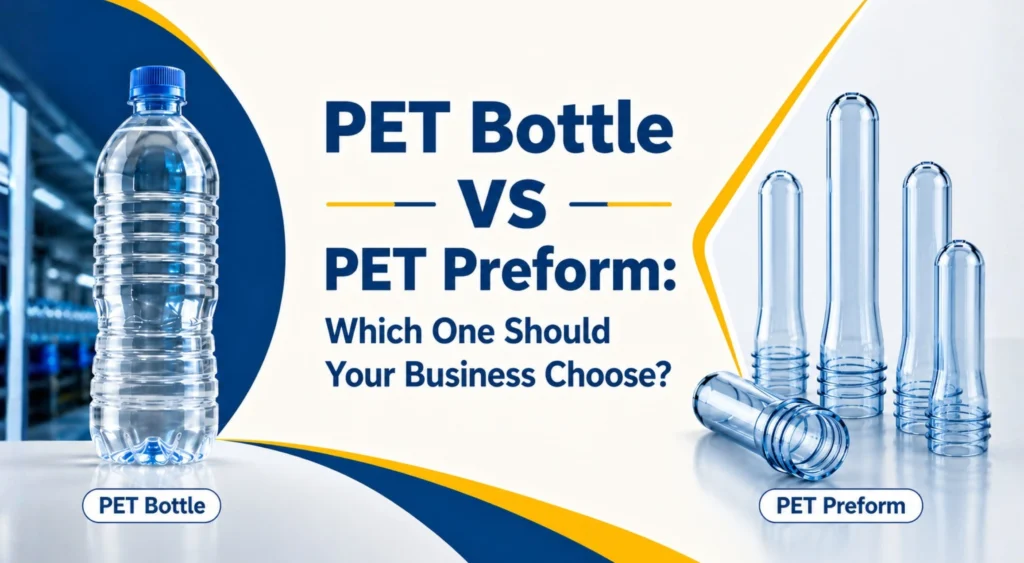
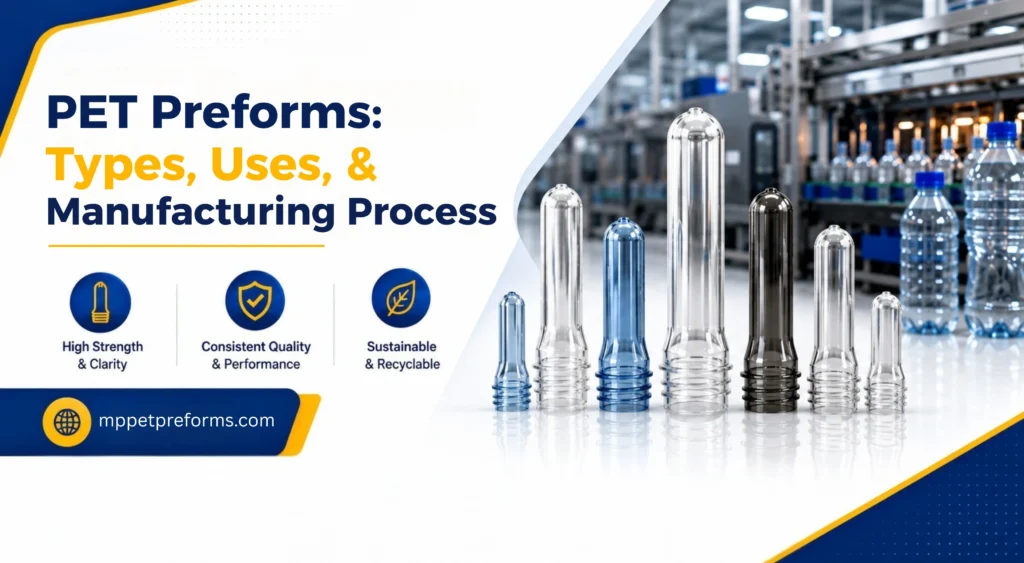
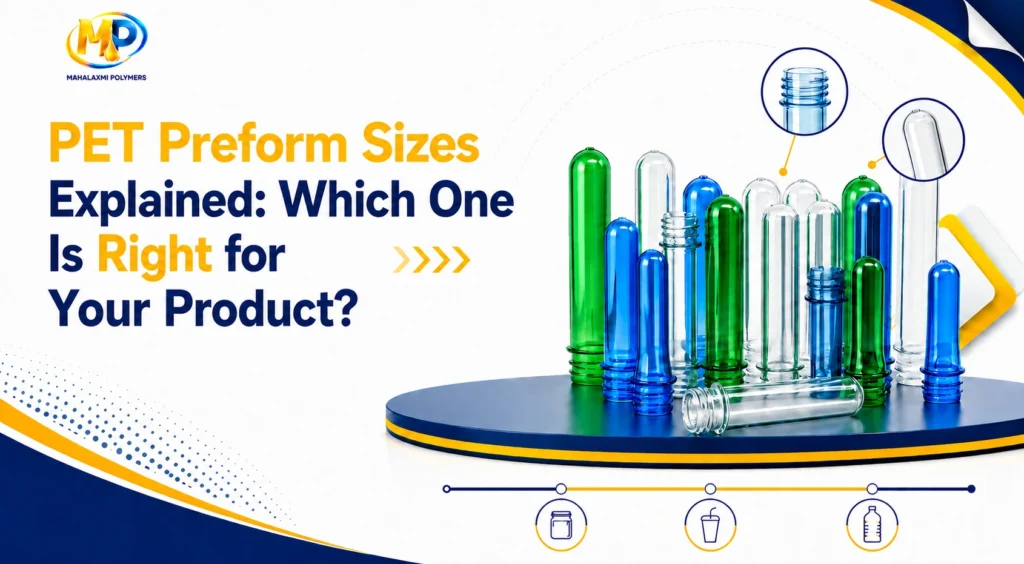
A PET preform is the small, test-tube-shaped form that is reheated and stretched inside a mold to create the final PET bottle. When manufacturers talk about PET preform size, they normally consider several specifications together:
- Neck size and neck finish
- Preform weight in grams
- Preform length and body design
- Wall thickness and material distribution
- Final bottle capacity
- Closure or cap compatibility
This is why two PET preforms with the same neck diameter can still have very different weights and applications.
For example, a 28 mm PET preform may be manufactured in several gram weights depending on whether it will become a small water bottle, beverage bottle, or larger container.
Industry standards also define specific neck-finish geometries rather than simply identifying the opening by diameter. CETIE, an international packaging standards organization, publishes detailed PET neck-finish specifications, including the widely used PCO 1881 format originally developed through ISBT.
Understanding PET Preform Neck Size
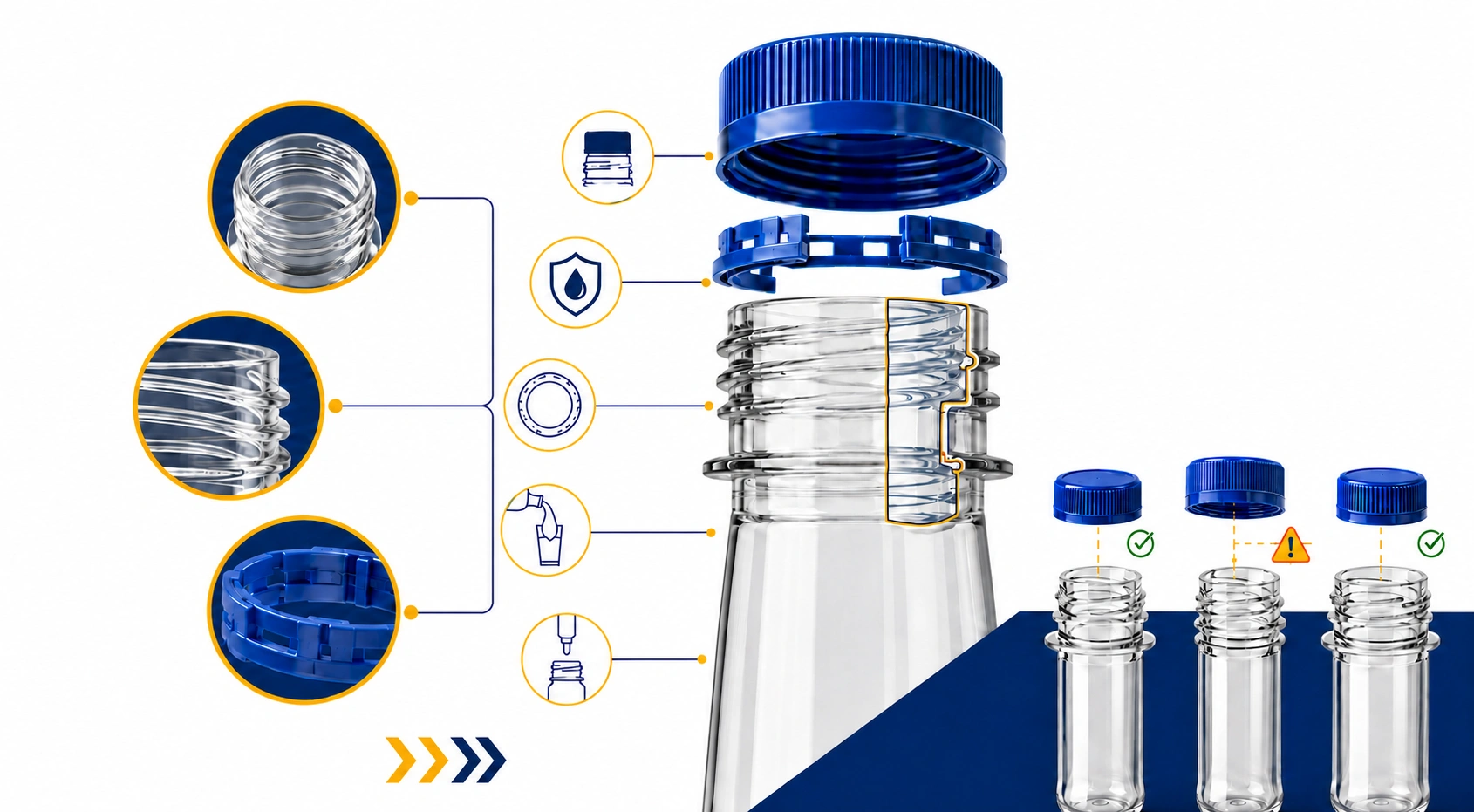
The PET bottle preform neck size refers to the neck finish at the top of the preform where the cap or closure is fitted.
Unlike the body of the preform, the neck is normally not stretched significantly during blow molding. Therefore, the neck finish must already be accurately formed during injection molding. The right neck is important because it controls:
- Cap compatibility
- Leak resistance
- Opening size
- Pouring experience
- Tamper-evident closure compatibility
- Filling-line compatibility
A difference of only a few millimetres or a different thread design can make a cap incompatible with the bottle.
Common PET Preform Neck Sizes
There is no single neck size suitable for every product. Some commonly used sizes include:
PET Preform Neck Size | Common Applications |
20–24mm | Pharmaceutical, personal-care and smaller containers |
25–26mm | Lightweight drinking-water bottles |
28mm | Water, soft drinks, juices and beverages |
30mm | Water and beverage packaging |
38mm | Juices, dairy beverages and containers needing wider openings |
46mm and above | Food containers, jars and wide-mouth packaging |
63mm–120mm | Larger PET jars and specialised wide-mouth containers |
These are general examples. So, the correct neck finish must always be matched with the bottle design, closure and filling equipment.
For example, lightweight PET packaging systems may use smaller finishes such as 26/22mm to reduce PET consumption while maintaining bottle performance. Sidel has developed packaging solutions specifically around lightweight neck and preform designs.
Why Is the 28mm PET Preform So Common?
The 28mm PET preform is one of the most widely recognised formats in beverage packaging. It is commonly associated with:
- Drinking water
- Carbonated soft drinks
- Juice
- Flavoured beverages
- Other liquid products
However, saying that a preform has a “28mm neck” is not enough to place an order. Different 28mm neck finishes exist. Two common examples are:
PCO 1810: An older, relatively longer neck-finish design that continues to be used for different beverage applications.
PCO 1881: A shorter neck finish developed to reduce material in the neck and closure area. CETIE describes PCO 1881 as one of the major international PET packaging standards.
Therefore, buyers should specify the exact neck finish, not simply ask for a 28mm PET preform.
PET Preform Weight Chart: Is There a Standard Weight for Every Bottle Size?
There is no universal PET preform weight chart that applies to every bottle. A 500ml bottle from one brand may use a different preform weight than another 500ml bottle because the bottles may have different:
- Shapes
- Wall thicknesses
- Neck finishes
- Base designs
- Filling pressures
- Product requirements
- Performance standards
For general understanding, common market examples may fall into ranges such as:
Final Bottle Capacity | Indicative Preform Weight Range |
200–350ml | Around 8–15g |
500ml | Around 10–21g |
1 litre | Around 20–30g |
2 litre | Around 28–45g |
3 litre | Around 40–60g or more |
These figures are only broad examples. They should not be treated as fixed specifications.
Advanced lightweight bottle designs can use considerably less PET. For example, Sidel has demonstrated a 500ml still-water bottle weighing only 6.5g as part of a highly optimised packaging system.
The final gram weight should therefore be selected after considering bottle design and performance requirements.
PET Preform Sizes According to Product Type
The product you are filling is one of the biggest factors in selecting the correct PET bottle preform.
1. PET Preforms for Water Bottles
Still water does not create internal carbonation pressure, which makes lightweight bottle designs possible. A PET preform for water bottles is therefore often designed to minimise material while still providing enough strength for filling, labelling, transportation, stacking and consumer use.
Common neck finishes can include 26mm, 28mm, 29/25mm, 30mm and other lightweight water-specific finishes depending on the packaging system.
2. PET Preforms for Carbonated Soft Drinks
Carbonated beverages create internal pressure because of dissolved carbon dioxide. For this reason, carbonated beverage preforms are selected based not only on capacity but also on pressure resistance, bottle base design, material distribution and neck-finish requirements.
PCO 1810 and PCO 1881 28mm neck finishes are commonly associated with beverage packaging.
3. PET Preforms for Juice
Juice packaging can require different specifications depending on whether the product is cold-filled, hot-filled, aseptically filled or requires additional barrier protection. Therefore, the correct PET preform should be selected according to the actual filling process rather than bottle capacity alone.
4. PET Preforms for Edible Oil
Edible-oil bottles need good structural stability, secure sealing and convenient pouring. PET is widely used for edible-oil packaging because it provides a lightweight, resealable and shatter-resistant alternative to materials such as glass.
5. PET Preforms for Food and Jars
Food powders, dry fruits, confectionery, spices, nutraceuticals and similar products may require wide-mouth PET preforms. These can use substantially larger neck sizes than beverage bottles.
For example, wide-mouth PET preform ranges can include 38mm, 46mm, 53mm, 63mm, 73mm and 83mm necks, while specialised jar formats may extend to 96mm or 120mm depending on the container.
Also Read: Types of PET Preforms and Their Industrial Applications
How to Choose the Right PET Preform Size
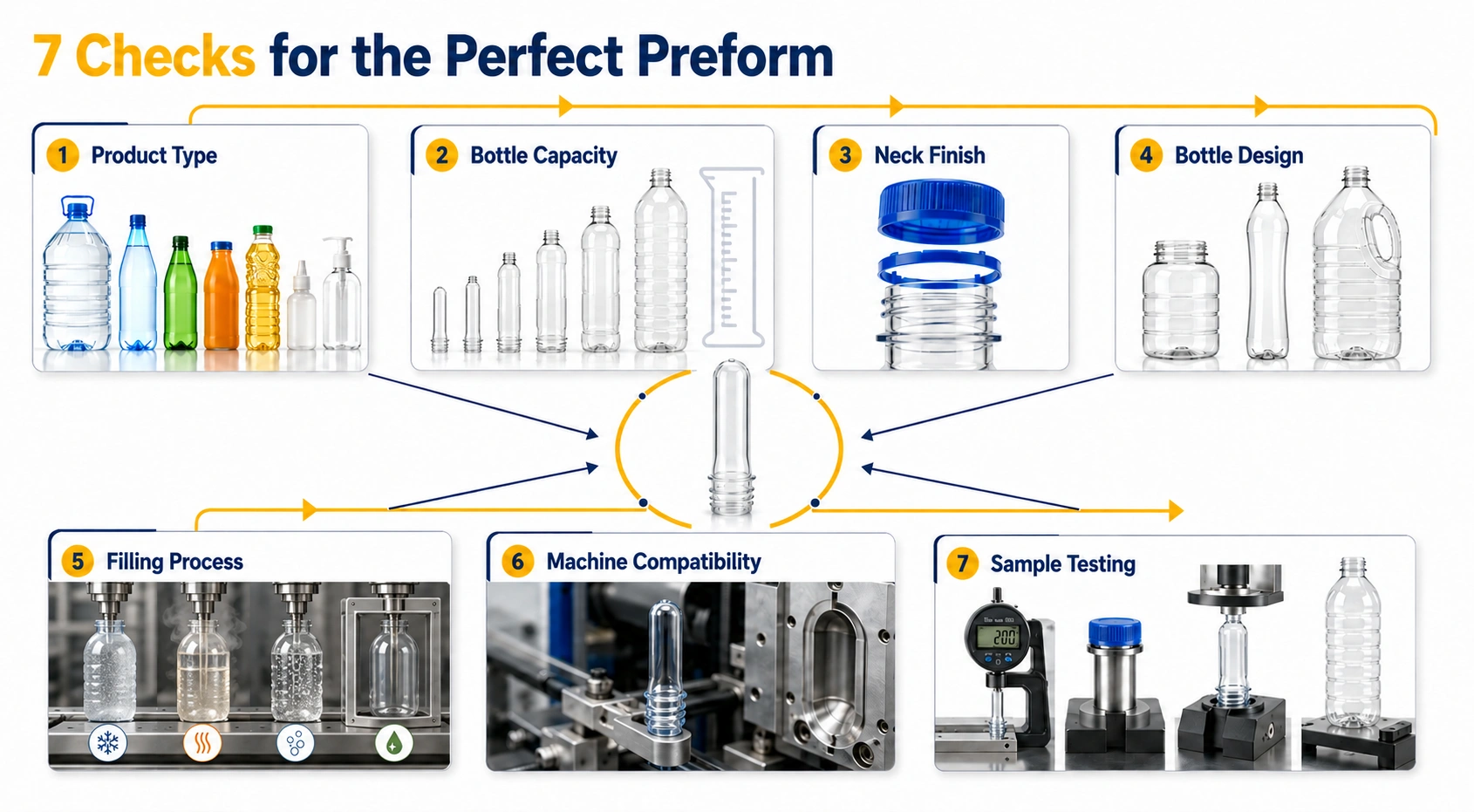
Rather than choosing PET preforms only by gram weight, follow these simple steps.
Step 1: Start With Your Product
First identify what will go inside the bottle.
Ask: Is it water, carbonated beverage, juice, edible oil, food, pharmaceutical product, cosmetic or household liquid? The properties of the product influence the strength, barrier, filling and closure requirements.
Step 2: Decide the Final Bottle Capacity
Know the exact volume you need, such as: 250ml, 500ml, 1 litre, 2 litres or 5 litres. Bottle capacity helps narrow down the required preform weight, but it should never be the only selection factor.
Step 3: Choose the Correct Neck Finish
Check which cap or closure you plan to use. The preform thread and neck dimensions must match that closure correctly. Instead of asking only for “28mm,” provide the complete neck-finish specification whenever possible.
Step 4: Consider the Final Bottle Design
A short, wide bottle behaves differently during blowing than a tall, narrow bottle.
Handles, grips, ribs, large label panels, shoulders and complex shapes can also affect material distribution. Therefore, the same preform weight may not perform equally well in two different molds.
Step 5: Check Your Filling Process
Your packaging process matters too. Find out whether you use:
- Cold filling
- Hot filling
- Carbonated filling
- Aseptic filling
- Other specialised filling processes
Heat and internal pressure can significantly change bottle-performance requirements.
Step 6: Confirm Blow-Molding Machine Compatibility
The preform must work correctly with your blow-molding equipment. Check factors such as:
- Preform length
- Neck support ring
- Neck finish
- Heating characteristics
- Machine handling system
- Stretching requirements
- Existing bottle mold
Changing neck diameter or preform geometry may require production-line modifications. Sidel specifically notes that moving between different neck/preform configurations can require adaptation parts or changes to injection components.
Step 7: Test Before Ordering in Bulk
Never rely only on a specification sheet when moving to a new bottle or preform. Run sample blowing trials. Check:
- Bottle weight
- Wall thickness
- Material distribution
- Cap fit
- Leakage
- Drop performance
- Top load
- Visual clarity
- Bottle deformation
- Filling-line performance
Small production trials can prevent much larger losses later.
Also Read: How to Identify High-Quality PET Preforms Before Bulk Purchase
Can One PET Preform Make Different Bottle Sizes?
In some cases, yes. A particular PET preform can sometimes be blown into more than one bottle design or capacity, provided the stretch ratios, material distribution and performance requirements remain suitable.
However, this does not mean one preform can be used for every bottle. The larger or more complex the bottle becomes, the more carefully the gram weight and preform geometry must be evaluated.
This is why professional bottle development should consider the preform, bottle mold and blow-molding process together, rather than treating them as separate decisions.
Common Mistakes When Selecting PET Preform Sizes
Choosing the wrong PET preform size can affect bottle strength, sealing, production efficiency, and overall packaging cost. Common mistakes include focusing only on bottle capacity or preform weight while ignoring neck finish, bottle design, filling process, and blow-molding machine compatibility.
Choosing Only by Bottle Capacity
Two 1-litre bottles may require different preforms because their shape, product, and performance requirements are different.
Selecting the Lowest Gram Weight to Save Money
Reducing PET can lower costs, but reducing weight without proper testing may create weak areas or production problems. The goal should be optimised weight, not simply minimum weight.
Ignoring the Neck Finish
A 28mm opening does not automatically mean every 28mm cap will fit. Thread profile, neck height and complete finish geometry matter.
Ignoring Your Existing Machinery
A new preform may look perfect on paper but still be unsuitable for your current heating, handling or blowing system.
Placing a Bulk Order Without Trials
Even small changes in preform geometry can affect the final bottle. Sample testing is always safer than discovering problems after thousands of kilograms have been delivered.
Why Choosing the Correct PET Preform Size Matters
The right PET preform can improve much more than the appearance of your bottle. Correct selection helps achieve:
- Better bottle strength: Material is distributed where the bottle needs it.
- Reliable sealing: The neck and cap work correctly together.
- Lower PET consumption: You avoid unnecessary resin without sacrificing performance.
- Fewer production problems: Compatible preforms move more smoothly through blowing and filling lines.
- Better product protection: The finished package can withstand its expected storage, filling and transportation conditions.
- Lower packaging costs: Even a small reduction in PET per bottle can become significant when millions of bottles are produced.
For this reason, experienced packaging developers increasingly look at the complete package like preform, neck, closure, bottle design and production process when also improving bottle performance.